

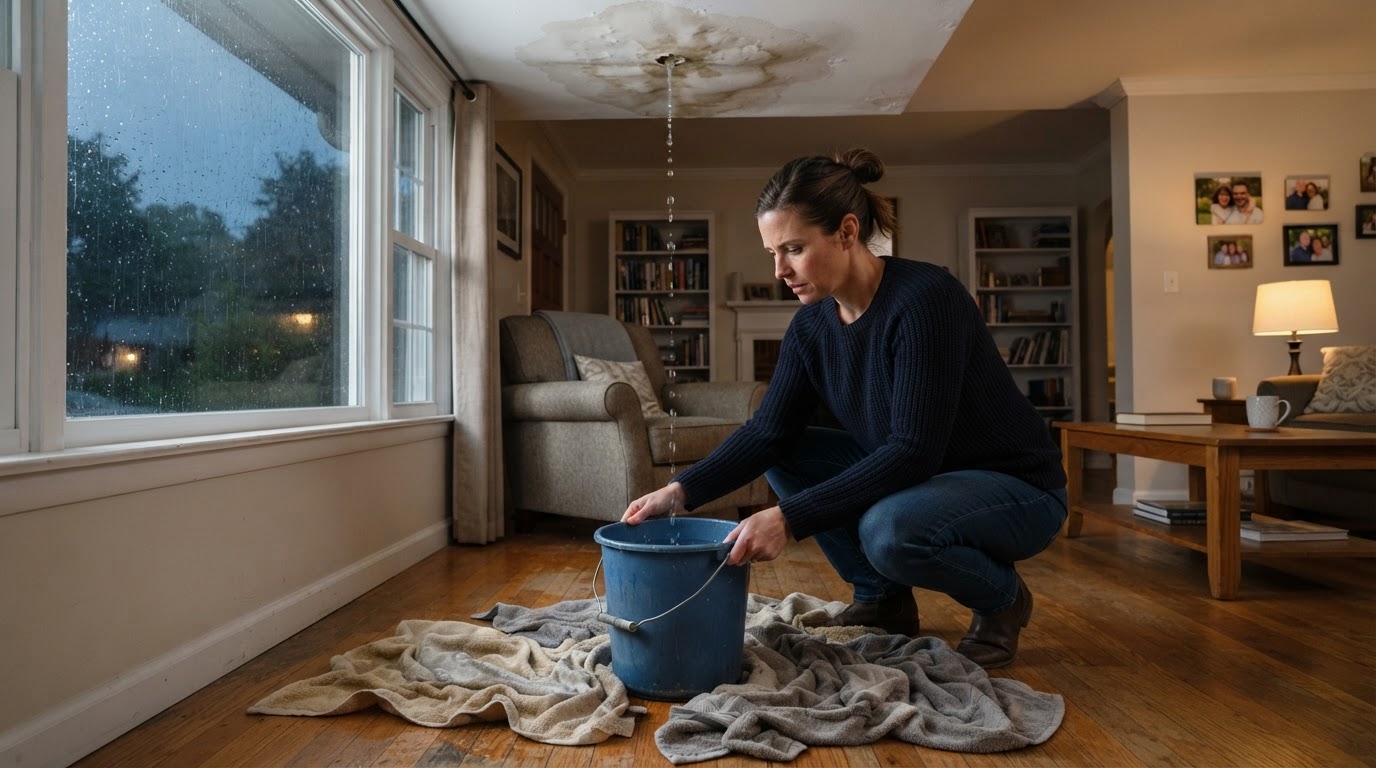
It usually starts the same way: a drip in the hallway, a stain spreading across the ceiling, during the worst rain of the month. A leaking roof feels like an emergency because it is one, but what you do in the first hour decides whether you are paying for a roof repair or for a roof repair plus new drywall, insulation, and flooring. Water damage multiplies fast. Here is the order to handle it in.
Step 1: Contain the Water Inside
Get a bucket or large container under the drip and move furniture, rugs, and electronics out of the area. Lay towels around the splash zone. If the ceiling is bulging downward, that is water pooling on top of it, and it is better to drain it on your terms: put a bucket under the center of the bulge and poke a small hole with a screwdriver. A controlled drain through one small hole does far less damage than a ceiling that lets go all at once and spreads the water everywhere.
Step 2: Document Everything Before You Clean Up
Take photos and video of the leak in action, the ceiling stain, and anything the water damaged. Note the date, the time, and what the weather was doing. This record is what an insurance claim runs on, and it is nearly impossible to recreate later. Do not throw damaged items away until your insurer has seen the photos.
Step 3: Track the Source From the Attic, If You Can Do It Safely
If your attic is safely accessible, look for where the water is coming in, with a flashlight and something to catch drips. Two things surprise homeowners here. First, the entry point is usually higher than the ceiling stain, because water runs down rafters and decking before it drops. Second, the most common culprits are not the shingles themselves but the flashing around chimneys, vents, and skylights, and cracked rubber vent boots. Knowing roughly where it enters helps your roofer fix it faster.
Step 4: Cover It From Outside, Only After the Storm
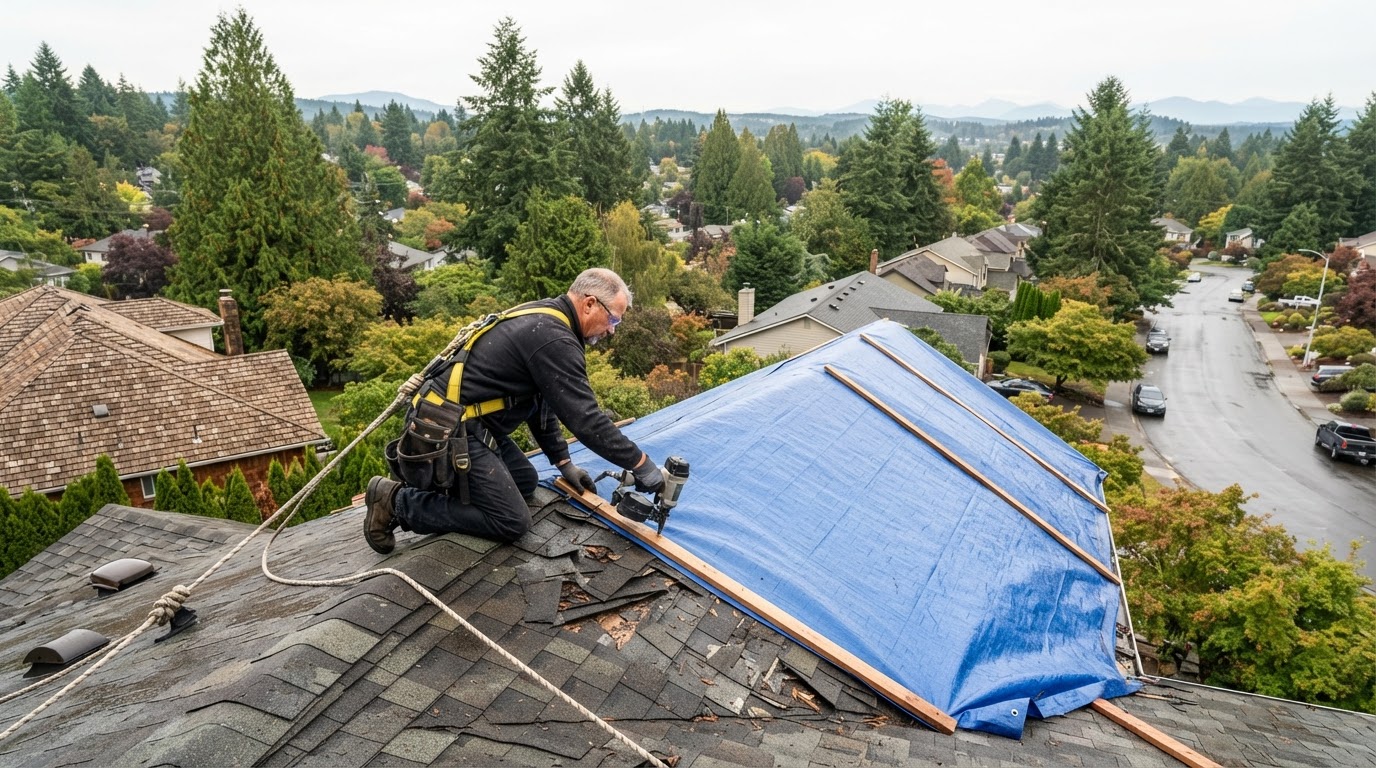
A tarp can save a ceiling, but a wet, windy roof is one of the most dangerous places a homeowner can be. Never go up during a storm, and never go up on a roof that is still wet. Once things are dry and calm, a tarp weighted down with sandbags or boards can hold a damaged section for a short time. In most cases the better move is to call for emergency tarping: a roofing crew has the harnesses, ladders, and materials to seal it correctly and safely, and the tarp visit usually becomes part of the repair plan.
The Most Common Causes We Find
In the Bellevue, Kirkland, and Lake Stevens area, most leaks we trace come down to a short list: failed or lifted flashing, cracked vent boots, shingles blown off ridge caps in windstorms, valleys clogged with needles and debris that back water up under the shingles, and roofs that have simply reached the end of their life. Our months of wind-driven rain are good at finding every weak point a roof has.
Emergency Repair, or a Bigger Problem?
A single failed component on an otherwise healthy roof is a repair, and a straightforward one. But a leak on a roof that is 20 years old, curling, and losing granules is usually a symptom, not the disease: fixing that one spot just moves the next leak to the following month. Our repair vs. replacement guide lays out the full checklist, but the short version is this: repair the cause when the roof is sound, and do not keep patching a roof that is finished.
What Not to Do
- Do not ignore a slow drip. A small leak rots decking and feeds mold long before it ever drips through a ceiling, and the eventual repair gets bigger every month.
- Do not seal the leak from inside with foam or caulk as a permanent fix. That traps water in the roof system and hides the damage while it spreads.
- Do not wait for the next storm to make the call. Roofers book out fast in the rainy season, and a known leak gets worse with every storm it sits through.
Frequently Asked Questions
How much does an emergency roof repair cost?
Most emergency repairs in the Bellevue and Seattle area run $400 to $1,800 depending on the cause and how accessible the spot is. Emergency tarping to stop the water right away is usually billed as part of the repair visit.
Will homeowners insurance cover a roof leak?
Insurance generally covers leaks caused by a sudden event, like a windstorm tearing off shingles or a tree limb coming through the roof, and the water damage that follows. It does not cover leaks from age and wear. Either way, the photos and notes you took in the first hour are what make a claim go smoothly.
How fast does mold grow after a roof leak?
Mold can start growing within 24 to 48 hours in damp material. That is why drying matters as much as stopping the leak: run fans toward the wet area, and if drywall or insulation got soaked, ask your roofer or a restoration company what needs to come out.
Can a leaking roof be permanently repaired while it is raining?
Temporary measures, yes. Permanent repairs need a dry window, because sealants and shingles do not bond correctly on a wet roof. The standard sequence is tarp first, then the permanent repair as soon as the weather gives a dry stretch.
Ready to upgrade Your Roof?
Get an honest assessment, clear pricing, and a 5-year workmanship warranty from our expert team.